As a guy whose worked with tens of thousands of homeowners and contractors on age in place showers over the years, I’m going to give it to you straight. And here it is….
It’s harder to design an age in place shower than a common shower.
And right now, you may be asking, “Mike, why would you say that?” Here’s why.
First, for an age in place shower to be a smart investment it not only has to be ‘functional,’ but it SHOULD NOT look like a ‘hospital shower.’
Second, an age in place shower has to work as well when you install it (when you, or your parents mobility is good), as it does if Father Time rears his ugly head down the road.
And third, a well designed age in place shower SHOULD NOT lower the resale value of your home.
You may now be asking how can I design my age in place shower to achieve these goals and NOT screw up? Follow these 13 tips to stay away from age in place shower design mistakes and you’ll be good to go. Let’s check them out.
Age in place shower design mistake #1 – The shower base threshold is too high
A shower step (or curb or threshold as they’re called) which is ‘easy-peasy’ today to step over, can seem like a mountain tomorrow if a loved one has a progressive illness, or their high school football careers end up haunting them years later.
So – you may be wondering what is a good shower curb height for an age in place shower?
Age in place shower design mistake #2 – The shower entry is too small
While it may be simple to walk in sideways into your tub/shower alcove today, this feat of dexterity may be problematic for you or a loved one tomorrow. And besides (and not to depress you), there could come a time when a caregiver is needed to help someone shower, and a small tub/shower entry can make this very difficult.
So, if you don’t want to waste money on an expensive shower door you’ll need to remove at a later date because it makes the opening too small, you may be wondering what you can do.
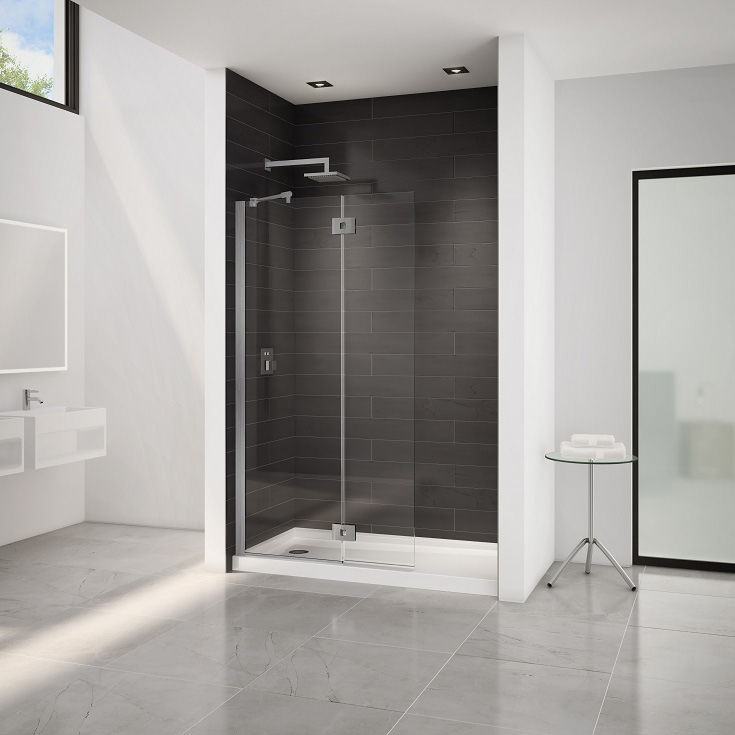
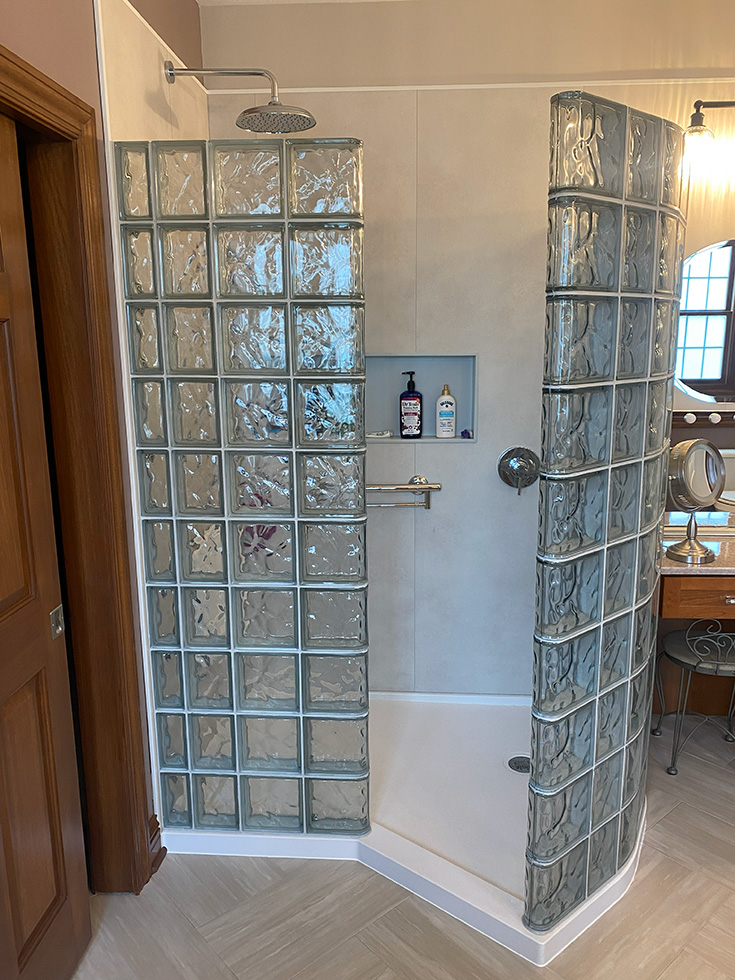
One option is to use a ‘shower screen.’ Shower screens have a small piece of fixed glass (which is anchored into a side wall) with a pivoting door on the end. With this product you can fully open the pivoting door and have 36” to enter in a typical 60” wide tub to shower conversion.
Another option is to use a weighted shower curtain with a water stopper at the bottom to minimize water escaping the shower.
And a third option would be a custom glass enclosure with a wider pivoting shower door. Note the largest glass shower pivoting doors are 36” wide.
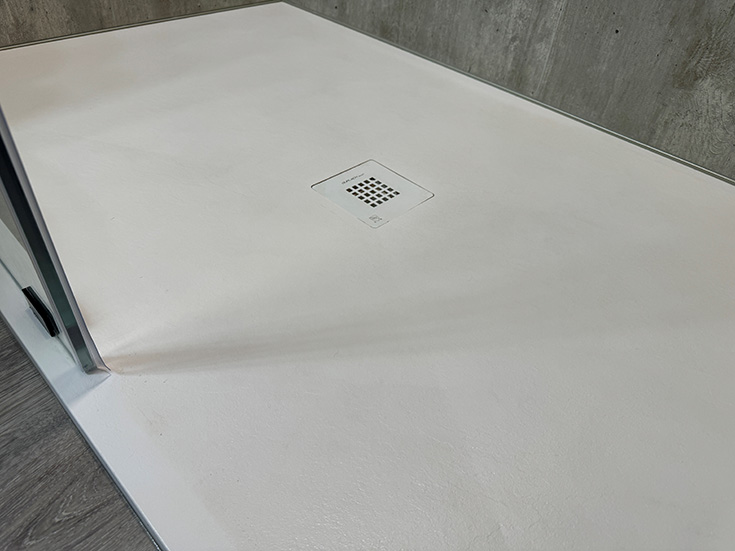
Age in place shower design mistake #3 – Your shower floor or shower pan is slippery
The number one place falls occur in a home is in bathrooms. This makes sense. It’s wet. It’s slippery.
And not to be Danny Downer or anything, but more people die from falls than from cancer!
So, how can you minimize falls inside your shower?
First, be more thoughtful about your choice of shower pans or shower flooring. Ask your shower pan or tile shower floor supplier what the ‘slip coefficient of friction’ is for their recommended product. Asking this will not only make you seem smart (and hey, we’ve all lost a few brain cells along our journey through life, so whatever we can do to ‘seem smart,’ sounds like a good idea to me – ha! ha!), but it’s so important to know the shower floor won’t be slippery.
Or better yet, feel the surface you’re considering for your shower floor with – and without – water on it. And – if your potential supplier will let you –do a ‘water test’ to make sure the surface isn’t slippery by getting the tile or base wet, then feeling it.
Age in place shower design mistake #4 – It’s a pain to clean the shower
If your mom is anything like mine, I could tell her I all want to NOT get on her hands and knees to clean the grout joints of her tile shower – but if it looks nasty, she’s going to do it, even if her mobility should tell her it’s NOT a good idea.
So, the question is if you have an aging parent who shouldn’t be cleaning their own shower – and you cannot afford a maid or butler (although that DOES sound WON-DER-FUL), how can you eliminate her ‘taking matters into her own hands (literally)’ when it comes to cleaning?
My recommendation (even if mom wants a stylish shower) is to go ‘grout free.’ This could include a stylish stone shower pan (with a textured bottom surface of course). And this could include grout free shower surround panels which look like actual tiles, have a 3 dimensional quality which you don’t find in the molded shower wall panels sold at home centers, or are the ones normally supplied and installed by ‘bath in a day’ companies.
And if she does insist on tile, then use large format tiles and low absorption urethane or epoxy grouts.
Age in place shower design mistake #5 – You find out (after it’s too late) it’s hard to properly install a grab bar because there’s not proper support behind the shower wall surrounds
Grab bars (the product everyone loves to hate) are not something a standard home builder is thinking about when they install fiberglass one-piece showers in their production homes. No, the builder is trying to build the job as cost-effectively as possible to maximize profits. However, this may become a problem for you or your parents when you want to transform the ‘production-builder-built plastic shower’ into an age in place shower.
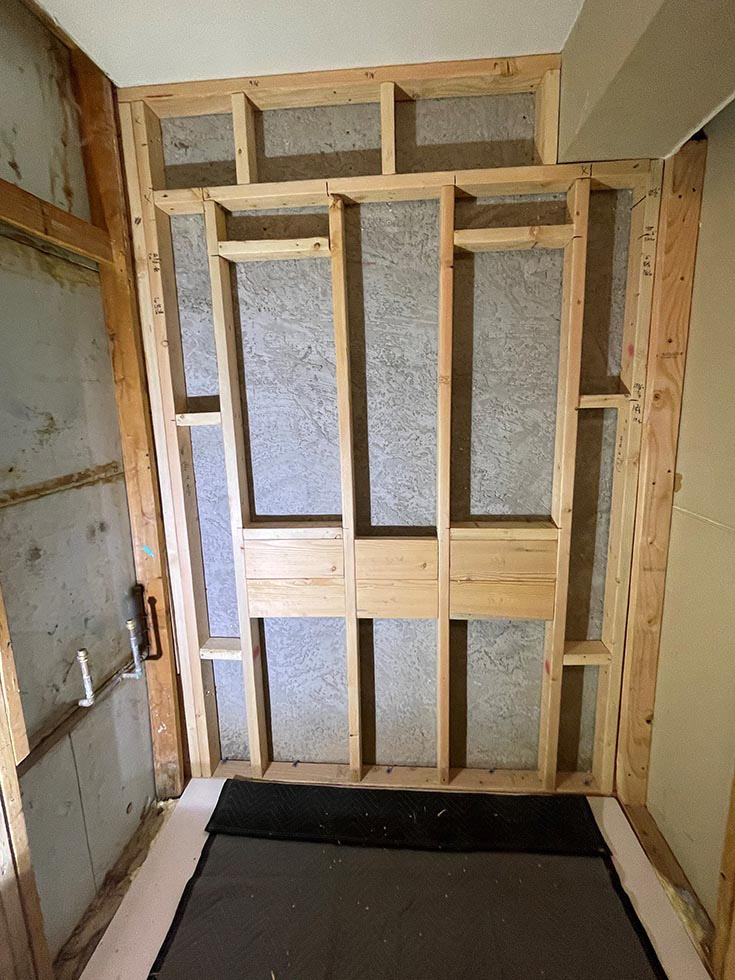
And this is why in most cases there’s no ‘blocking’ (and no this isn’t a football term but refers to wood behind shower walls to help mount grab bars, seats etc. to a shower surround wall) behind the walls.
So, if you’re remodeling – and even if you don’t need them now – add wood behind the walls at the proper heights for seats or grab bars to allow for a sturdy installation if you need them down the road.
Age in place shower design mistake #6 – You can’t shower while seated
We all want to shower independently for as long as possible. But standing while showering or shaving your legs can become a feat which isn’t safe as we age. And this is why it’s critical to have a way to independently shower, while seated.
And even if you don’t have a huge shower it’s possible to accomplish this goal. Basically, there’s 3 key ingredients to allow showering while seated to be a reality even in a smaller shower. They are:
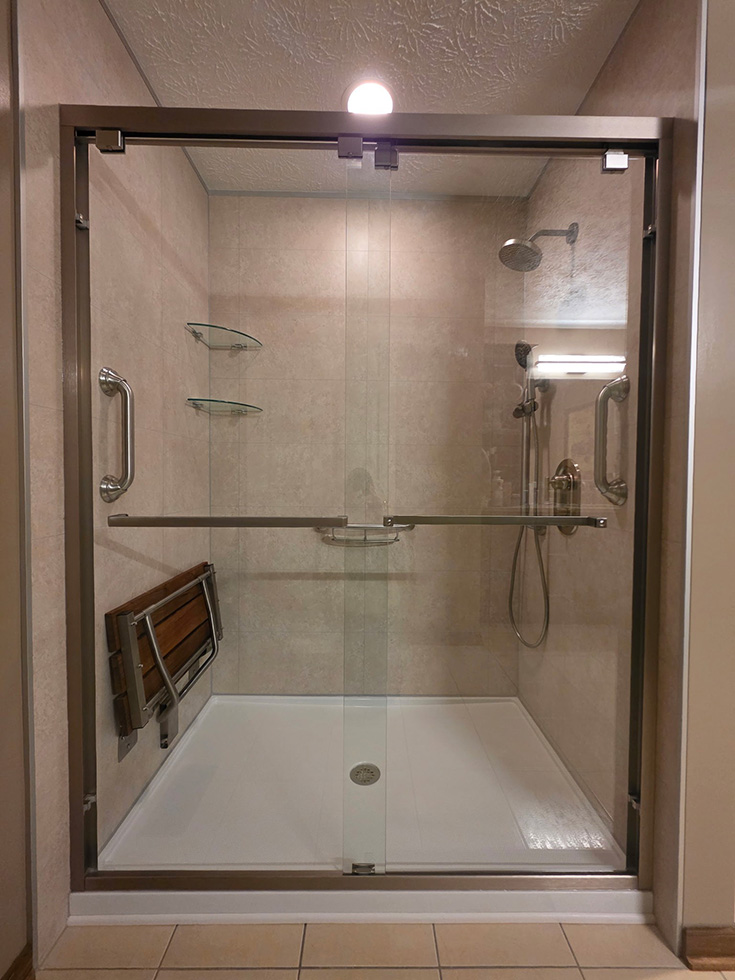
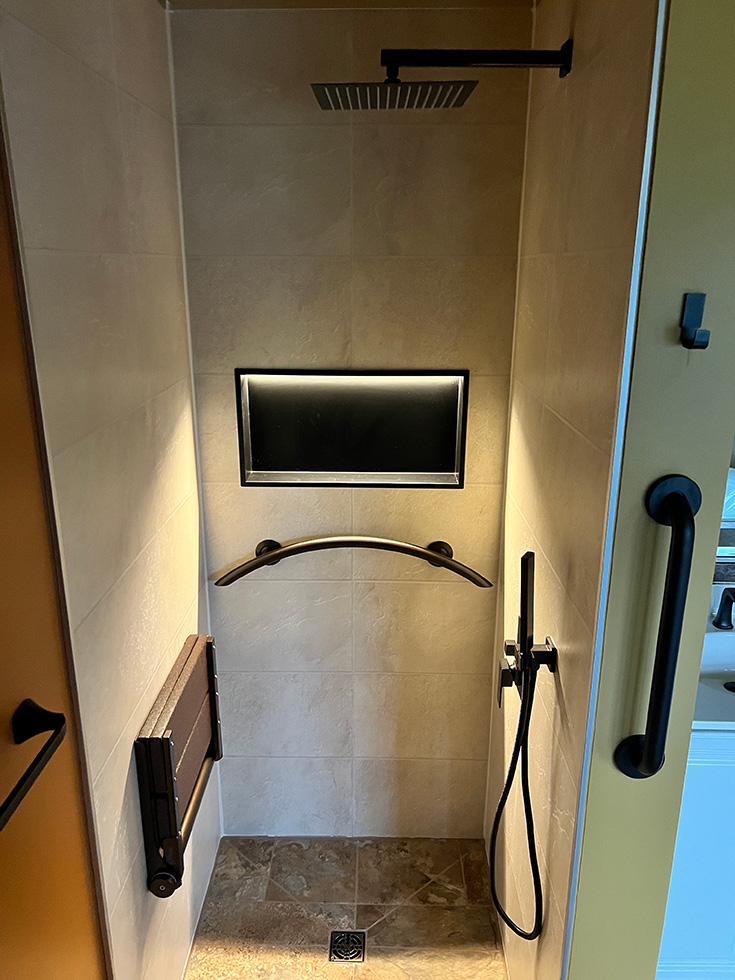
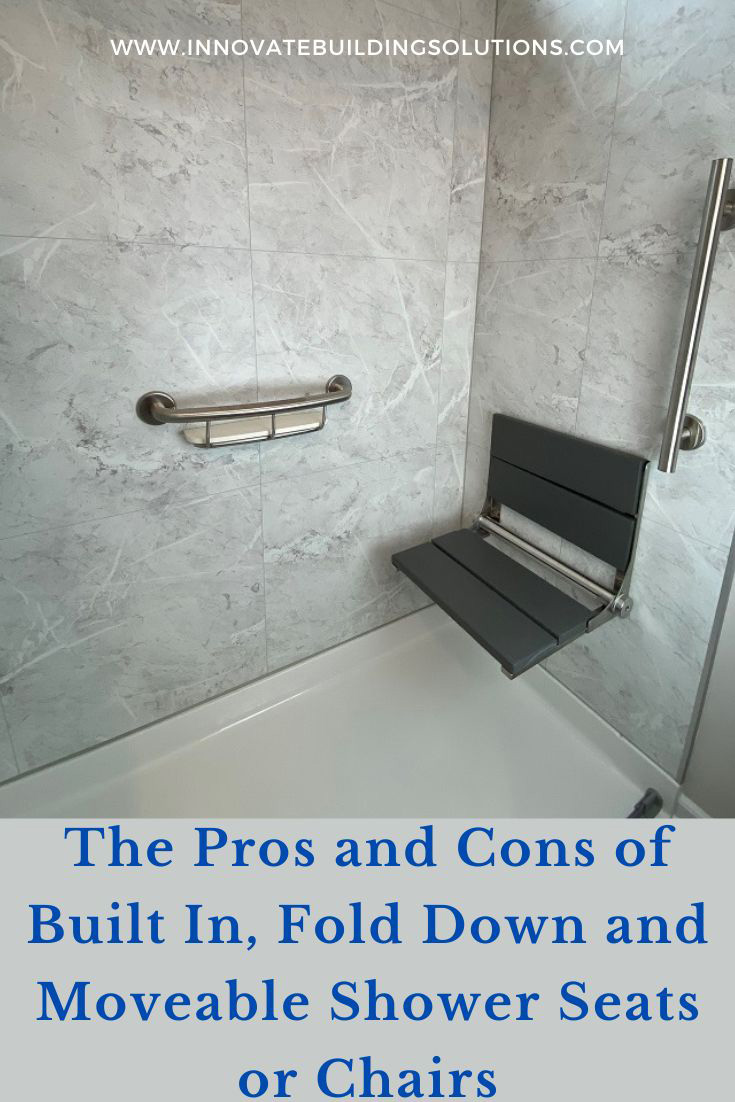
A fold down seat. I prefer fold down seats to bench seats because you can bring them down when they’re needed, and fold them up when they’re not. In addition, they take little space.
A hand held shower. It’s impossible to direct the water to the right spots if you’re dependent on a fixed shower head which is mounted 7’ from the shower floor and you need to shower while seated. Hand held showers are not only good for showering while seated but are excellent to clean the shower AND the family dog!
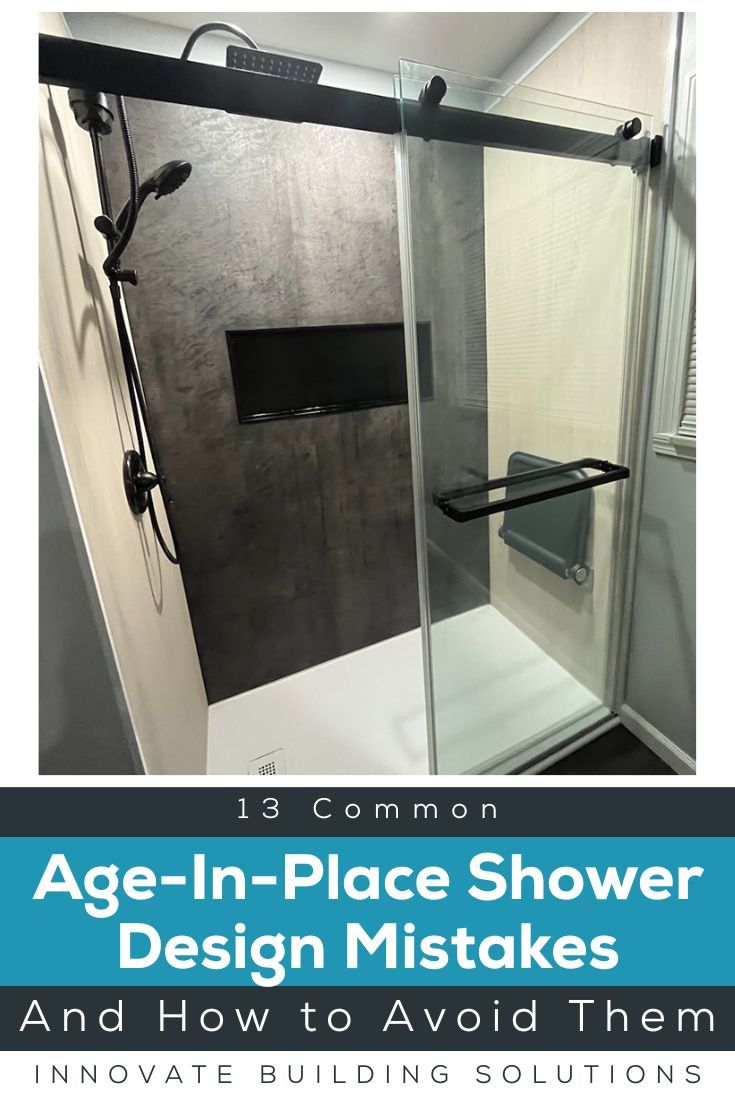
A place for showering products and safety bars close at hand. Nobody wants or needs to struggle to shower while seated if they have a recessed niche, multi-function grab shelf, or grab bar close at hand to reach supplies or stabilize themselves to sit or stand.
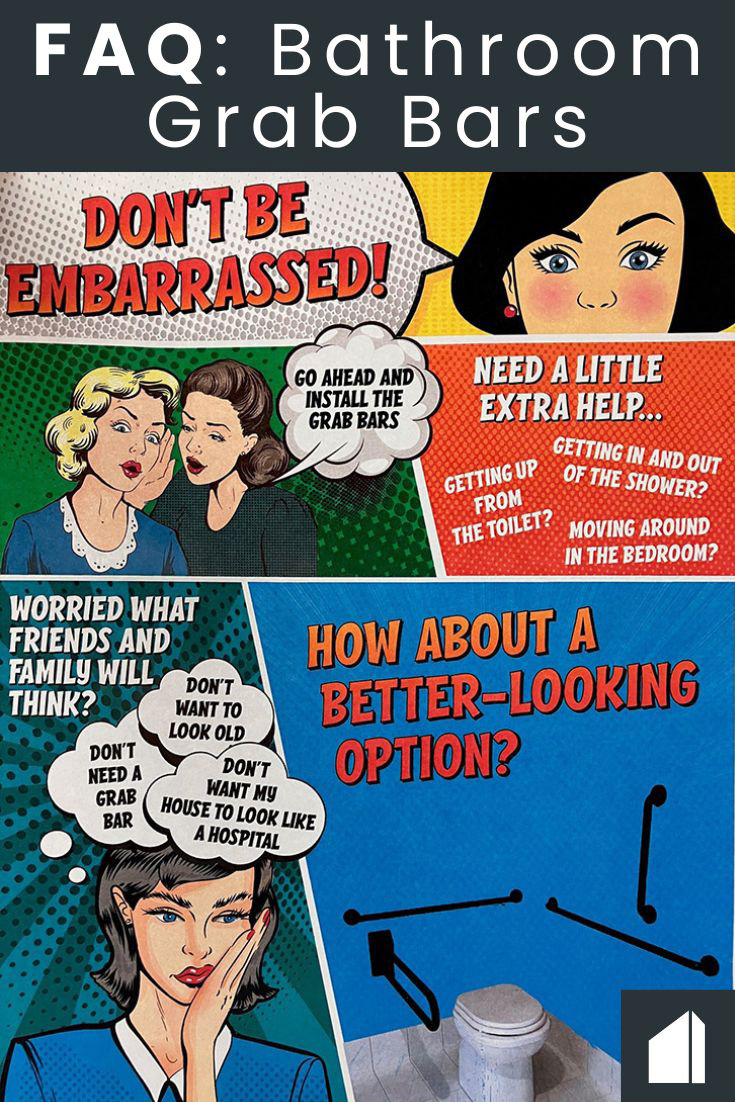
Age in place shower design mistake #7 – Grab bars which are ugly, poorly designed, or in the wrong location
The reality of an age in place shower is items which are usually considered ‘accessories,’ are actually ‘necessities’ in an age in place shower. And nothing can be a bigger life saving ‘necessity’ than a grab bar.
And although many people can ‘logically’ agree with this statement, they like to stay as far away from grab bars as possible because they’re depressing and can make your shower look like a cheap truck stop. YUCK!
Age in place shower design mistake #8 – You don’t have enough storage, so soap and shampoo bottles are on the shower floor, or stored in an Dollar-Store shower caddy which is hard to reach
While I haven’t run a ‘scientific survey,’ but I’ll bet if I asked if you have enough shower storage, 9 of out of 10 would say, “No frickin’ way!”
And I know this is true by the number of tacky Dollar-Store-esque plastic shower caddies hanging over shower heads in this country today because the existing shower lacked storage.
And while the shower caddy may have ‘gotten you by’ when everyone could stand to use it (even if it looked god-awful), when mobility is a concern, this cheap storage ‘add-on’ isn’t the best, and can be hard for someone to reach who has a hard time standing while showering.
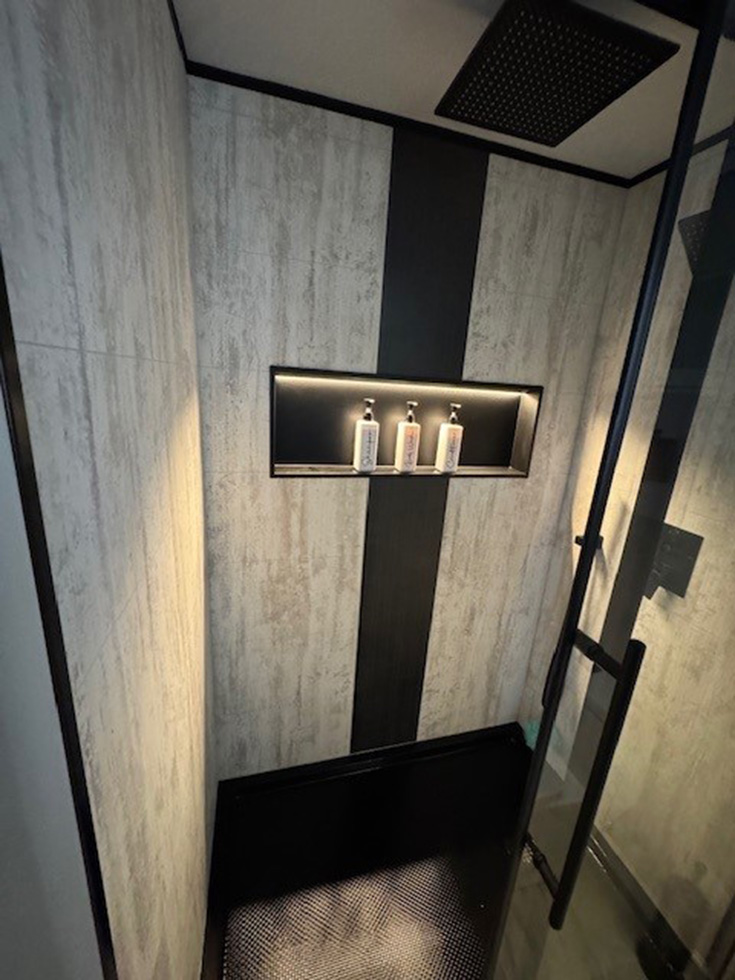
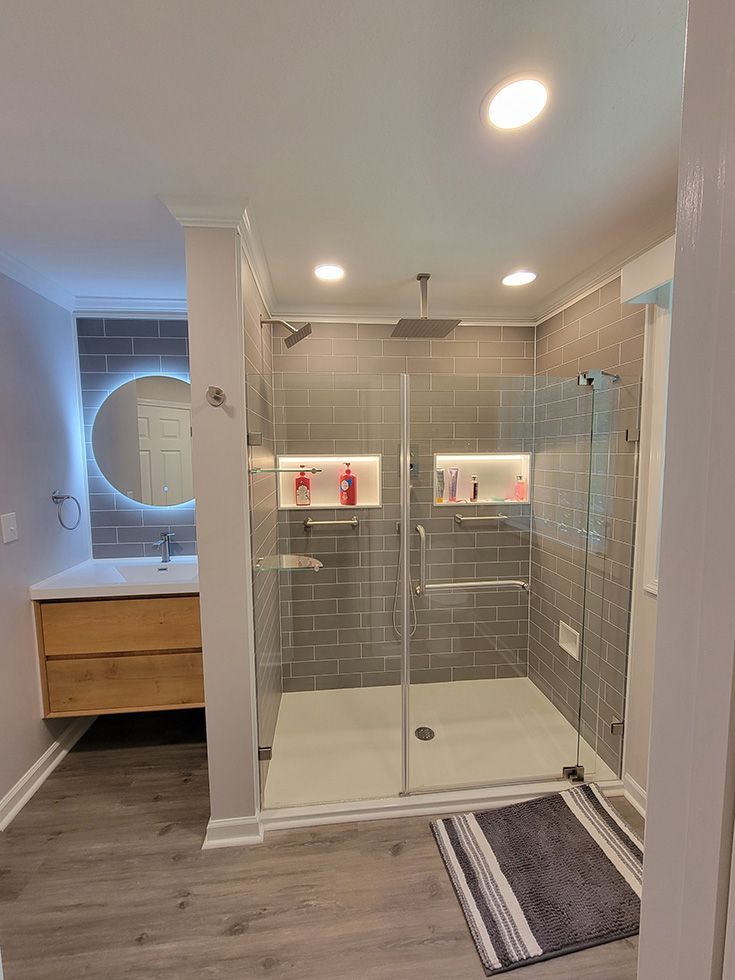
Better ideas include using unused ‘wall cavities’ and installing recessed shower niches horizontally (especially when you have a 48” or 60” wide shower) or vertically (which is smart if you’re stuck with a 3’ x 3’ stand up shower) to ‘grow your storage’ in the same shower footprint.
Another idea is to add corner shelves. Corner shelves out of the way, yet still add storage space, and can be installed anywhere on the wall.
Age in place shower design mistake #9 – You can’t access the shower controls while seated
As an ‘extension’ from age in place shower design mistake #6, the need to have the shower controls close at hand for everyone is critical. The smart way to do this is with a diverter and a handheld shower. They’re so versatile. You’ll wonder how you did without one.
Age in place shower design mistake #10 – Poor lighting in the shower
Have you watched your kids or grandkids reading, or scrolling through their phones in the dark, and thought how in the world can they see what they’re reading?
When it comes to our eyesight, it doesn’t get better with age like fine wine. This is why lighting is soooo important for an age in place shower. And besides, more light helps the bathroom feel better for anyone using it as well.
The question becomes how can you improve your shower and/or bathroom lighting? Ideas include:
Add a transom window higher on the wall for increased natural light without sacrificing privacy (or showing the neighbors your hot…. or not so hot, bod!).
Add a skylight or solar wall tube if your bathroom is on the top floor.
Age in place shower design mistake #11 – The seating is either too much, not enough, in the wrong place, or made of the wrong materials.
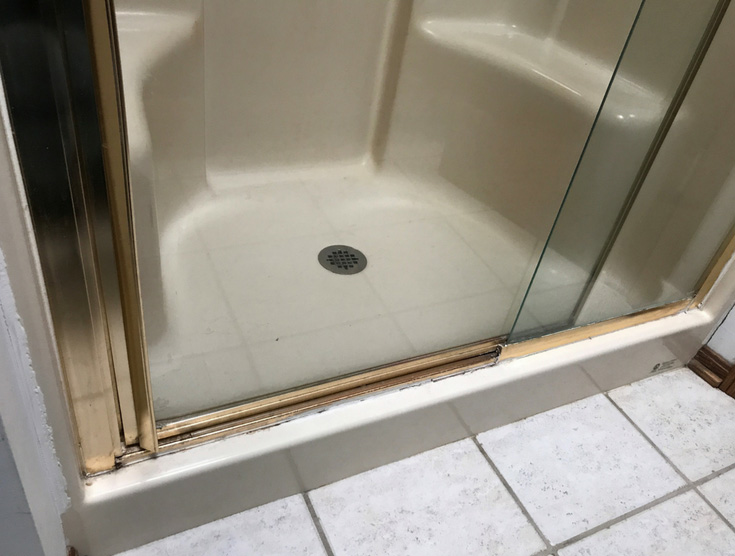
If you’ve got a ‘one piece’ fiberglass shower like the one below you may HATE, HATE, HATE your seating, even though you DO HAVE seating. The dual seats eat up so much room. They may, or may not, be at the right height or depth, and many become little more than a place to set towels or shampoo bottles.
So, how can you get seating right in your age in place shower? Here’s some ideas:
Don’t install a bench seat at the opening which narrows the width of the entrance. If you need a transfer bench seat at the entrance consider using a fold down option.
Make sure the shower seat is wide, deep, and strong enough to support the weight of everyone.
Make sure there’s no ‘rough edges’ for an older person (with more brittle skin) to cut themselves, or pinch points to get hurt when moving the seat up and down.
Make sure the seat is designed to last with composite materials vs. certain natural woods which deteriorate.
Age in place shower design mistake #12 – You use a ramped shower pan – assuming you might need one – then find it hard to sell the home years later
Yes – there are cases where you’ll want – and need a ramped shower pan (or zero entry shower or wet room). However, there’s also times owners put in a ramped pan – only to find out it was never used, and later, when trying to sell the home, prospective buyers are hesitant to put in an offer because they don’t want a ‘handicap shower’ (or worse yet, they want YOU to remove and replace this newly remodeled shower).
And while none of us are Nostradamus, we can all agree ramped shower pans aren’t winning any shower design awards or are an ‘in-demand’ selling feature.
So, the question is how can you create a stylish (and easy to sell) bathroom which can (if required) work for a family member using a wheelchair or walker? Here’s two ideas:
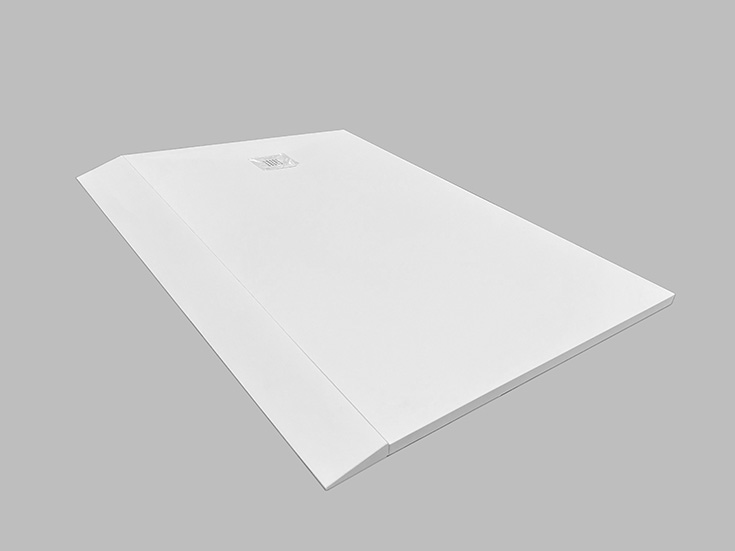
Use a low profile shower pan with a separate ramp kit. With a ramp kit you can silicone it to the shower pan when it’s needed and remove it when it’s not (or when you need to sell the property).
Install a one level wet room. While wet rooms aren’t the cheapest option – they’re sleek, contemporary, AND safe for anyone to use.
Age in place shower design mistake #13 – You find out your shower base or walls sprung a leak!
It’s NOT a good day when you find water from your upper-floor shower leaking in the floor below. And often (especially if you have a tile shower) there’s NO warranty – so you’re SOL!
Idea #2 – Choose a tile supplier/contractor who offers a ‘long-ish’ warranty for materials and labor. Usually, these contractors use waterproof backer boards for their tile installations (like Wedi and Schluter) and better grouts (like epoxy and urethane grout). And the best tile warranties I’ve seen are 5 years.
So, are you better equipped to know the products you need for an age in place shower which won’t become a mistake you’re paying for later? Do you need more help?
If I did my job right in this article I’ve provided you practical ideas for an age in place shower which’ll be built to last and NOT ugly or institutional.
And as you’ll see from the article below titled 15 Lessons You Can Learn from My Safer, Simpler, and more Stylish Master Bathroom my wife Rose and I used many of these ideas in our own age in place shower we remodeled two years ago! Even though I’ve got to tell you I’m waaaaay too young for an age in place shower being a ‘young 65 year old.’ Although I’ll tell you if I was dyslexic I’d magically become 56!
And while I’ve tried to give you a good number of ideas, I know this article WAS NOT talking specifically to your situation and bathroom.
So, given this – I’d love to offer you personalized help.
If you’re looking for design insights for a stylish, simple, safe, sellable, and space-saving age in place shower – or referrals for contractors to install one for you, call a Shower Specialist at Innovate Building Solutions at 877-668-5888 or request a Free Design Consultation
And lastly – thanks for reading this article – and putting up with my wacky personality. Basically, the older I get the more I like to laugh along the way as I’m dishing out advice. And for your info it’s not a problem for me if you’re laughing with me or at me! I can take it!
President of Innovate Building Solutions a nationwide supplier and regional (Cleveland and Columbus) remodeling contractors. Some of our product lines include glass counters, floors, backsplashes, glass blocks and grout free shower and tub wall panels
Bruce – sorry it took me a while to get back to replying to this. We don’t really have a dealer closet to Albany NY – but we’d be happy Bruce to work with a contractor of your choosing and give them insights on our systems. Feel free to call us at 877-668-5888 – Mike
Bruce – thanks for following the blog. Yes – I think we can lead you to an installing dealer who can assist you.
Feel free to call 877-668-5888 and either ask for me – or one of our team and we’ll look at our dealers and see who we can get to assist you with the installation and material supply. – Mike
Bruce Hempel
Mike, I’ve been following your blog for years, gleaning design ideas and my choices for components and materials (I like your FIBO panels, and I have gained good ideas from articles like this one about aging in place details) . I’m in NY State, and you are far away, or I’d consider hiring you to do the work. (I’m too old to do it myself anymore, and there’s some benefit to using people with more experience.) Do you have any leads for bathroom contractors in eastern NY (an hour south of Albany) who have experience with FIBO panels? I’ll be changing a tub/shower to a walk-in shower, and I will be renovating the whole room (the other end is a laundry space), so we are talking vanities, sinks, flooring, and walls, not just the shower itself..

















Mike Foti
Bruce – sorry it took me a while to get back to replying to this. We don’t really have a dealer closet to Albany NY – but we’d be happy Bruce to work with a contractor of your choosing and give them insights on our systems. Feel free to call us at 877-668-5888 – Mike
Mike Foti
Bruce – thanks for following the blog. Yes – I think we can lead you to an installing dealer who can assist you.
Feel free to call 877-668-5888 and either ask for me – or one of our team and we’ll look at our dealers and see who we can get to assist you with the installation and material supply. – Mike
Bruce Hempel
Mike, I’ve been following your blog for years, gleaning design ideas and my choices for components and materials (I like your FIBO panels, and I have gained good ideas from articles like this one about aging in place details) . I’m in NY State, and you are far away, or I’d consider hiring you to do the work. (I’m too old to do it myself anymore, and there’s some benefit to using people with more experience.) Do you have any leads for bathroom contractors in eastern NY (an hour south of Albany) who have experience with FIBO panels? I’ll be changing a tub/shower to a walk-in shower, and I will be renovating the whole room (the other end is a laundry space), so we are talking vanities, sinks, flooring, and walls, not just the shower itself..